
St. Landry Parish Sex Offender Checks
The Louisiana State Sex Offender and Child Predator Registry, maintained by Louisiana State Police BCII, is the official starting point. It receives information from courts, corrections agencies, sheriffs, and municipal police. Search by name when one is known, or use geographic tools for a city, ZIP code, parish, address area, radius, map, or list.
Gather spelling variants, aliases, approximate age, and a known location first. Compare the photograph, physical description, address, vehicle details, conviction jurisdiction, and registration status. The registry warns that its information is not guaranteed complete or timely, so verify a questioned status with the agency named on the profile.
Four Louisiana Registry Search Modes
St. Landry Parish searches are not limited to one name box. Louisiana law authorizes person and geographic searches, checks of contact details or online identities, and automated notice tied to a selected area.
- Person: use a name and spelling variants.
- Place: use address, city, ZIP, parish, radius, map, or list controls.
- Identity: check a telephone number, email address, screen name, or other online identity.
- Notice: enroll for email alerts tied to a selected ZIP code or radius.
Each mode answers a different question. Identity search results are subject to statutory disclosure limits, and a map gives geographic context rather than a full criminal history.
Geographic results should be read with care. A radius shows the distance between a search point and a reported registration location; it does not measure risk or predict conduct. Map and list views may show the same set in different ways. Note the profile's update date and responsible agency before relying on a location, especially when residence, work, or school information may have changed.
Louisiana Registry Searches
The Louisiana State Police registry page provides the official entry route. Read its conditions and warning before beginning.
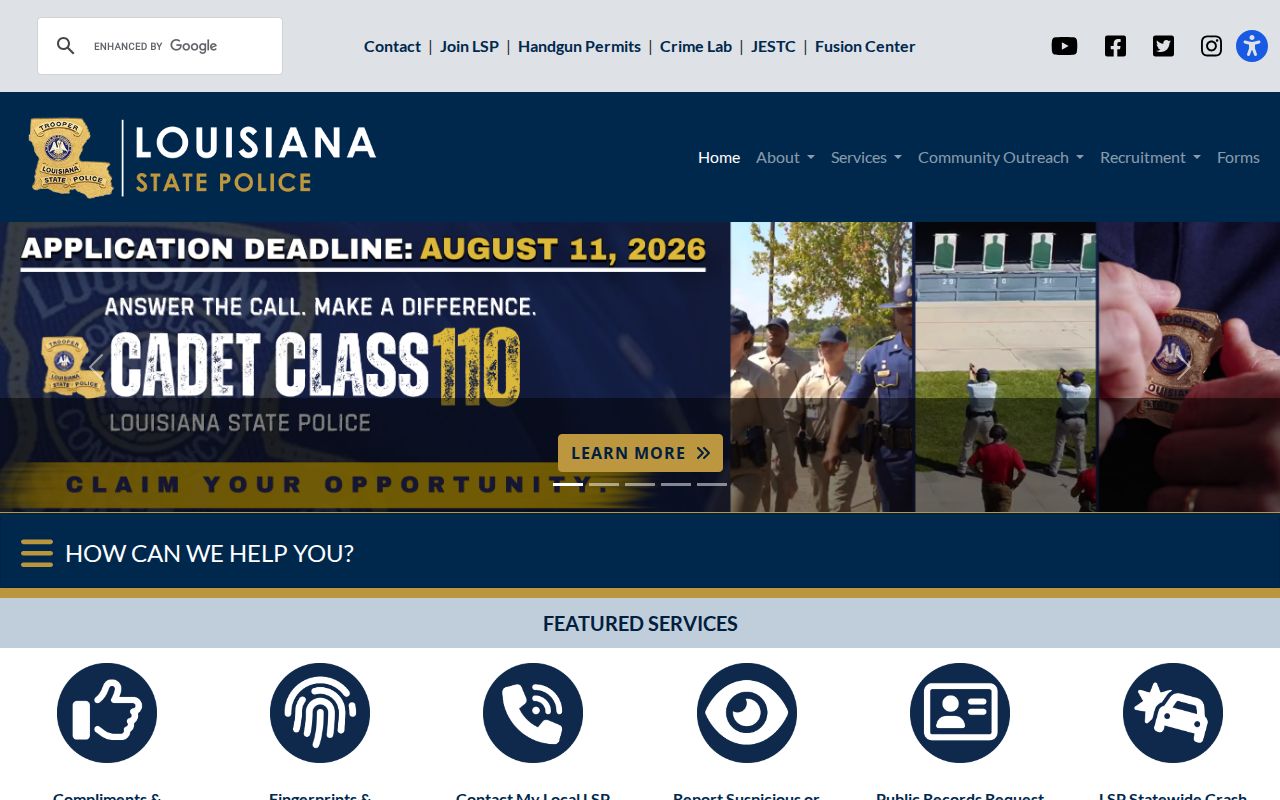
The official landing page identifies the state source before a user enters any personal or geographic terms.
Louisiana R.S. 15:542.1.5 directs the central registry to provide public internet search capability. Local sheriffs and municipal agencies collect and verify required information, then transmit it to BCII. This split matters when a field appears wrong. State Police operates the statewide search, while the agency identified on the profile can inspect the local registration contact and report a correction through official channels.
- Open the official registry and accept its conditions of use.
- Choose a person, geographic, map, or identity search and enter known details.
- Compare several identifiers in the result list rather than relying on a name alone.
- Open the profile, note the responsible agency, and verify stale or conflicting details.
| Field Label | Type | Required | Notes |
|---|---|---|---|
| Name | Text | Optional | Try known spelling variants. |
| Address, city, ZIP, parish | Text/select | Search dependent | Choose St. Landry Parish when offered. |
| Radius | Selector | Search dependent | Confirm current live options. |
| Phone, email, online identity | Text | Optional | Disclosure is limited by statute. |
| Map/list | View | No | Changes the geographic display. |
| Notification signup | Form | Optional | Email plus selected area or ZIP. |
| Search/reset | Buttons | No | Warning acceptance precedes results. |
NSOPW Searches Beyond St. Landry Parish
The National Sex Offender Public Website offers a free multi-jurisdiction supplement when residence, work, school, or conviction information may cross state lines.
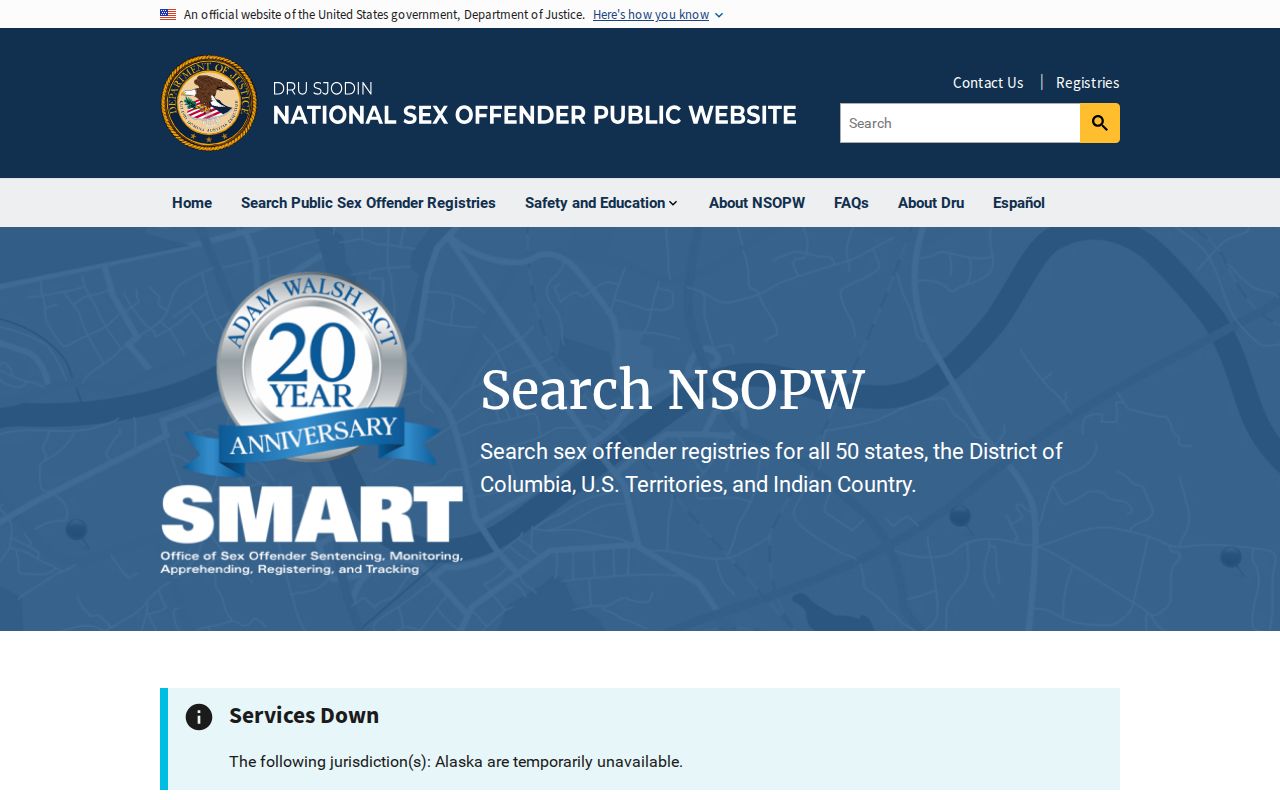
The national interface broadens the search, but it does not replace the source registry. Coverage and displayed fields come from participating jurisdictions, so open the originating profile for current limitations and agency instructions.
Registry Profiles: What They Show
A public profile combines identification, location, offense, vehicle, and compliance details. Victim identity is withheld under R.S. 15:546, and some operational identifiers remain law-enforcement-only.
Compare several public identifiers. A matching name alone can identify the wrong person, and a nearby marker does not establish that someone is at a place at a given moment. Offense descriptions concern the qualifying conviction, not every part of a criminal history. Public work, school, vehicle, and online-identity fields appear only as Louisiana law authorizes. A profile is therefore a focused registration record, not a full court docket or rap sheet.
| Name & Aliases | Primary and alternate names. |
|---|---|
| Photo & Physical Description | Photo, sex, race, hair and eye color, height, weight, age or birth date, and marks. |
| Registered Address | Residence plus public work or school information where applicable. |
| Offense & Statute | Offense, conviction jurisdiction, and date. |
| Vehicles | Vehicle, plate, or VIN details where public. |
| Registration Status | Compliance status and available verification information. |
St. Landry Registration Update Chain
Louisiana R.S. 15:543 generally requires in-person registration with the sheriff of residence, and municipal police when applicable, within three business days of conviction or release. R.S. 15:545 requires the local agency to send fingerprints, identifying information, history, and offense text to BCII within three business days.
A municipal resident may therefore interact with more than one local office. If an address looks stale, contact the agency shown on the profile. Failure to register is addressed by R.S. 15:542.1.4, but investigation and enforcement belong to law enforcement.
Registration Levels and Duties in Louisiana
Louisiana uses offense and duration categories, not a simple federal tier label. R.S. 15:544 sets the main periods, and R.S. 15:542.1.1 governs verification. A person without a fixed residence renews every 14 days.
Registration duties can also require updates to residence, employment, school attendance, vehicles, telephone numbers, email addresses, and online identities. Verification frequency is separate from the duty to report a change. The conviction, later record, and current statute control the duration. A person reviewing their own obligation should not calculate an end date from a public profile alone.
| Level / Tier | Duration | Verification Frequency |
|---|---|---|
| Default registrable offense | 15 years | Annual |
| Sexual offense against a victim who is a minor | 25 years | Every six months |
| Aggravated offense, qualifying juvenile lifetime category, or later registrable offense after a prior one | Life | Every three months |
Reducing a Fifteen-Year Period
Certain people in the 15-year category may ask a court to reduce the period to ten years after a clean record and qualifying treatment. R.S. 15:544 controls the motion, and relief is not automatic.
The court record, treatment proof, history, and current law matter. A person reviewing their own duty should obtain current records and legal guidance before relying on a calculated end date.
St. Landry Alerts and Sheriff App
Louisiana can send email notice when a registrant begins living, working, or attending school within a selected radius or ZIP. The official sheriff app listing documents another St. Landry Parish communication channel.
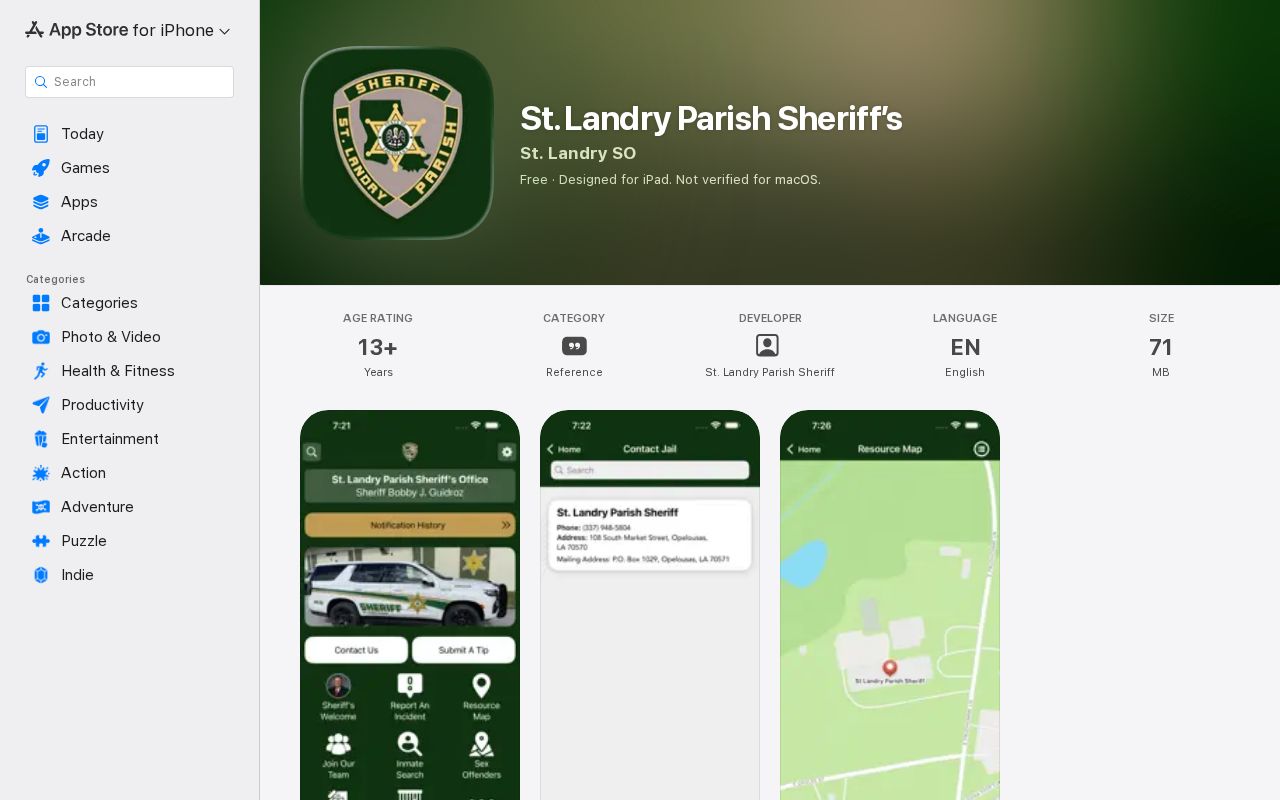
The app can help users reach agency information, but the state registry and agency listed on a profile remain the status sources.
Using Registry Information Lawfully
Registry information supports awareness and safety planning. It does not authorize a private person to confront, punish, follow, threaten, or expose a registrant or household. Send suspected noncompliance to the listed registration agency.
For a possible violation, preserve the public profile link and describe the specific field or conduct to law enforcement. Do not investigate at a residence or contact neighbors. Emergencies belong with 911. A non-urgent concern should go to the sheriff or municipal registration agency shown on the profile, which can compare the public entry with information that is not open for public inspection.
Harassment is not public safety. Do not threaten, stalk, intimidate, or harass a registrant or anyone in the household. Louisiana stalking law, R.S. 14:40.2, applies.