
Criminal Court Cases in St. Landry Parish
The 27th Judicial District Court handles felonies and other state criminal matters filed in St. Landry Parish. Divisions A through D sit at the parish courthouse. The judges conduct hearings, but the Clerk of Court keeps pleadings, minutes, images, judgments, and indexes in Suite 121.
Opelousas and Eunice City Courts keep their own traffic and misdemeanor dockets. A district search can miss those cases. Federal charges belong to the Western District of Louisiana, not the parish clerk.
The district courthouse is at 118 South Court Street in Opelousas, and the clerk's main line is 337-942-5606. Court Division staff can route a request for current criminal pleadings or older indexed material. The clerk's published overview says the office holds suits indexed from the parish's beginning, but confidential juvenile and adoption records are not public. A searcher should identify the defendant, approximate filing year, and forum before contacting the counter. That detail helps distinguish a parish prosecution from a similarly named city matter.
St. Landry Parish Case Record Searches
ClerkConnect provides account-gated access. Criminal indexes reach back to the parish's beginning, while actual document images are available from 1997 forward. Plans cost $20 per day, $50 per 30 days, or $600 per year, with printing at $1 per page.
The portal is useful for remote research, but its account gate and image boundary shape the search. A party-name result can point to more than one suit, so compare the docket number, filing year, case type, and parties before opening a paid image. A document that is indexed but not imaged may still exist at the courthouse. Call the Court Division rather than treating a blank image list as proof that no paper file exists.
- Choose ClerkConnect for district court or contact the proper city court.
- Search by party name or case number.
- Narrow results by filing year or case type.
- Read the full docket and open the relevant image.
- Ask Suite 121 for missing or certified documents.
| Field Label | Type | Required | Notes |
|---|---|---|---|
| Last name | Text | Search key | Try aliases and exact spelling. |
| First name | Text | Search key | Use with surname. |
| Case number | Text | Best key | Identifies one filing. |
| Date of birth | Date | When shown | Separates common names. |
| Case type or year | Filter | Optional | Narrows indexed suits. |
What a Criminal Case File Contains
A St. Landry Parish file explains one prosecution through its charging paper, minutes, motions, plea or trial, judgment, and sentence. The docket is only a chronology. Read the imaged judgment or minute when the exact outcome matters.
The arresting officer's first charge description may not match the bill of information or indictment. Prosecutors can decline a charge, amend it, or file another count supported by the investigation. The docket then records hearings and orders, while the final minute or judgment supplies the disposition. When a portal entry uses shorthand, obtain the underlying image. A certified copy bears the clerk's authentication; an ordinary screen print does not.
| Case Number and Court | Identifies the filing and custodian. |
|---|---|
| Charging Document | States the charge actually filed. |
| Docket Entries | List hearings, motions, pleas, and orders. |
| Hearing Dates | Show scheduled and completed events. |
| Disposition and Judgment | Records dismissal, acquittal, or conviction. |
| Sentence and Conditions | States custody, probation, and filed terms. |
Criminal Case Stages in St. Landry Parish
A booking charge can change before the clerk opens a case. The district attorney selects the filed charge, and a grand jury may act. No fixed local timetable was published, so follow the actual docket.
Arraignment is the point where the accused answers the filed charge. Motions and pretrial settings may follow. A plea, dismissal, acquittal, or trial judgment resolves each count, though sentencing and later supervision entries can come afterward. Appeals create another record layer. The Third Circuit Court of Appeal handles Louisiana appeals from the 27th Judicial District Court, while federal appeals follow a separate federal route.
Case flow: Arrest › Booking › Charges › Arraignment › Disposition › Sentencing
St. Landry Court Access Tools
The official ClerkConnect page publishes its subscription and print terms.
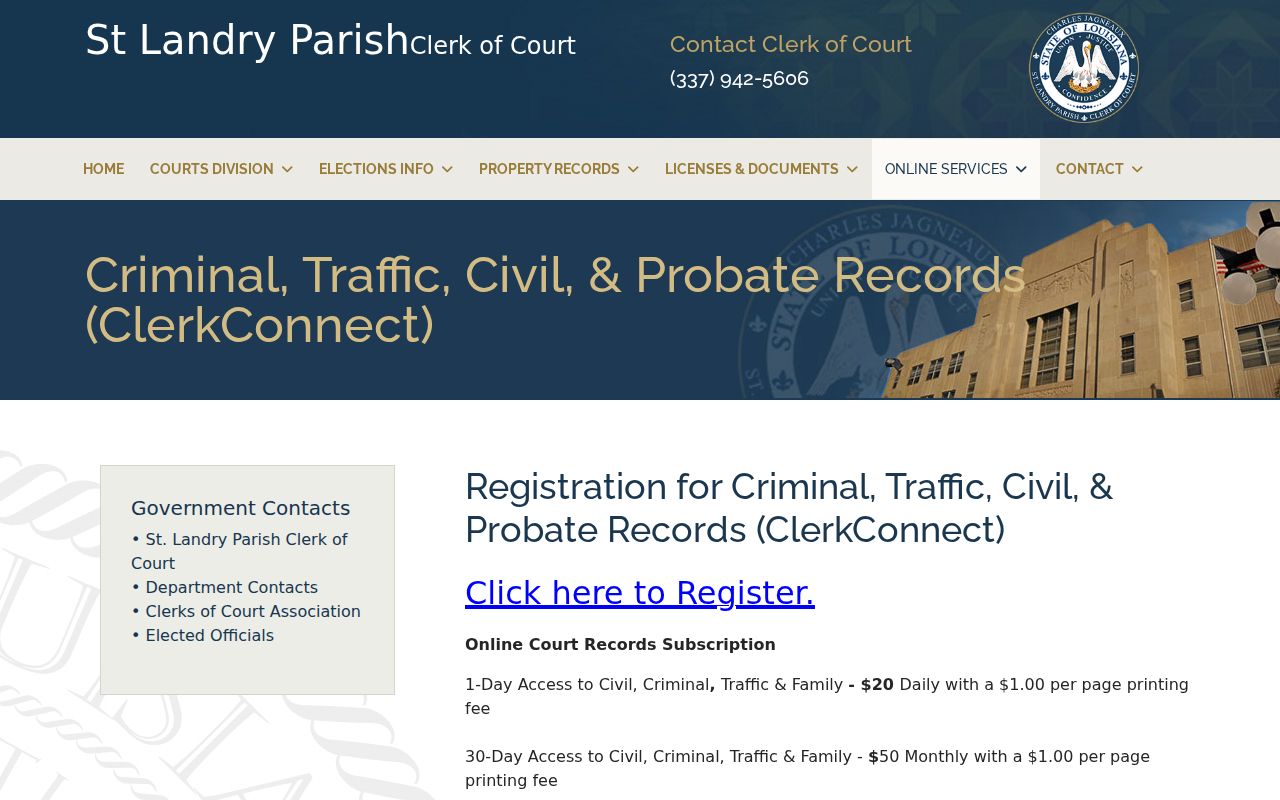
A paid portal image is convenient, but certification still comes from the clerk. Older indexed cases may require Archives/Research at extension 5151.
The 1997 image boundary matters most for older prosecutions. Clerk indexes can point to a case long before scanned pleadings appear online. Give Archives/Research the full name, date range, and docket number when available. Staff may need to consult a bound index or paper volume. Copy availability and certification should be confirmed before sending payment because the published $1 rate applies to ClerkConnect printing, not every counter service.
The district attorney contact channel distinguishes administrative, felony, and traffic units.
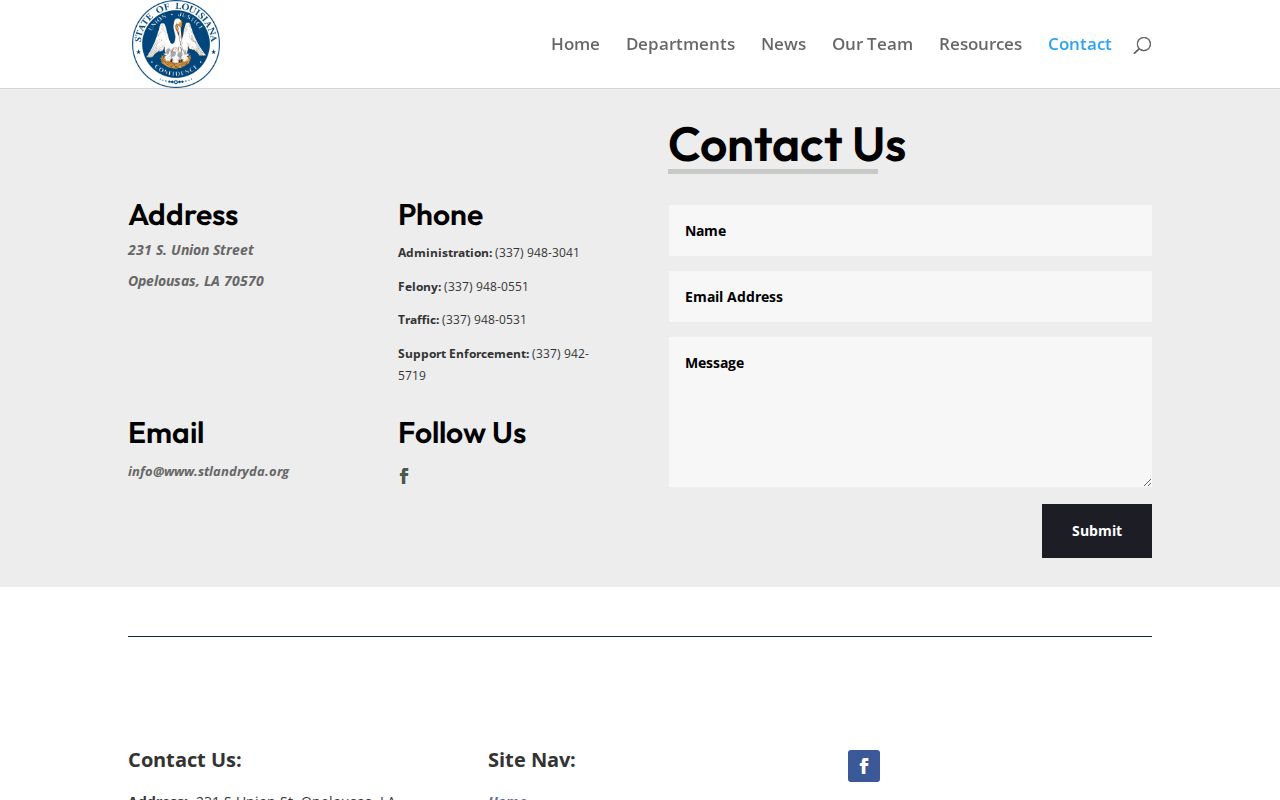
The prosecutor chooses charges and holds protected work product. The clerk remains the custodian of filed public court proceedings.
Federal St. Landry Court Cases
PACER provides federal dockets and documents after registration.
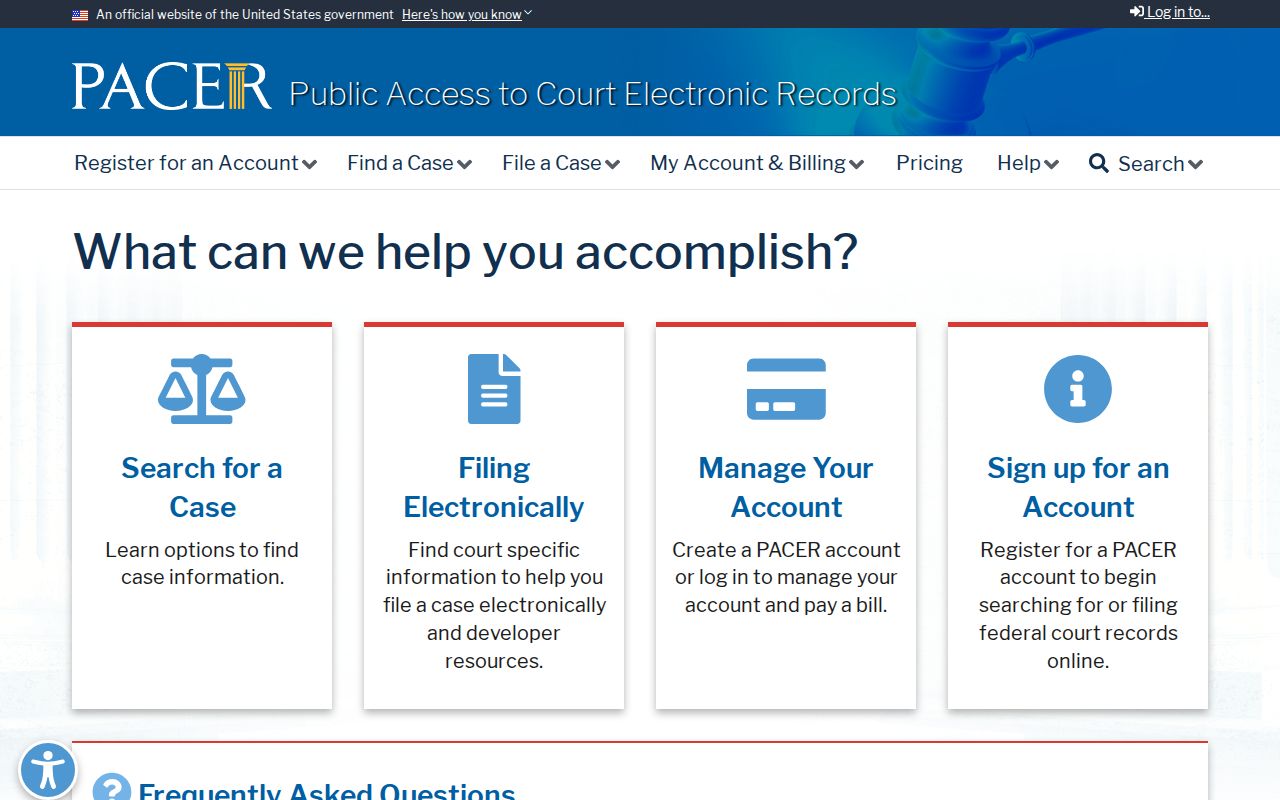
St. Landry Parish lies in the Western District of Louisiana. PACER is separate from ClerkConnect, and sealed federal filings are unavailable.
PACER searches by party, case number, court, and filing date, then provides a docket report and available federal documents. Federal records can include an indictment, motions, minute entries, judgment, and sentence. They do not flow into the parish clerk's portal. Begin with the Western District of Louisiana when the charging agency, case number, or document identifies federal jurisdiction.
St. Landry Sentences and Parole
The Board of Pardons and Committee on Parole publishes state parole material.
A closed court case does not prove supervision ended. Public dockets and results from 2012 forward help trace later parole action, while much pre-parole material stays confidential.
Probation and parole are also different. A district judge imposes probation as part of a sentence, and revocation filings can appear in the court docket. The Louisiana Committee on Parole decides parole release for eligible state prisoners. St. Landry Parish adult probation and parole supervision is served through the Lafayette district office. Presentence reports and officer notes are generally confidential, so use the judgment and public hearing result for releasable facts.
Crime Data Versus St. Landry Cases
The FBI Crime Data Explorer supplies reported-offense context.
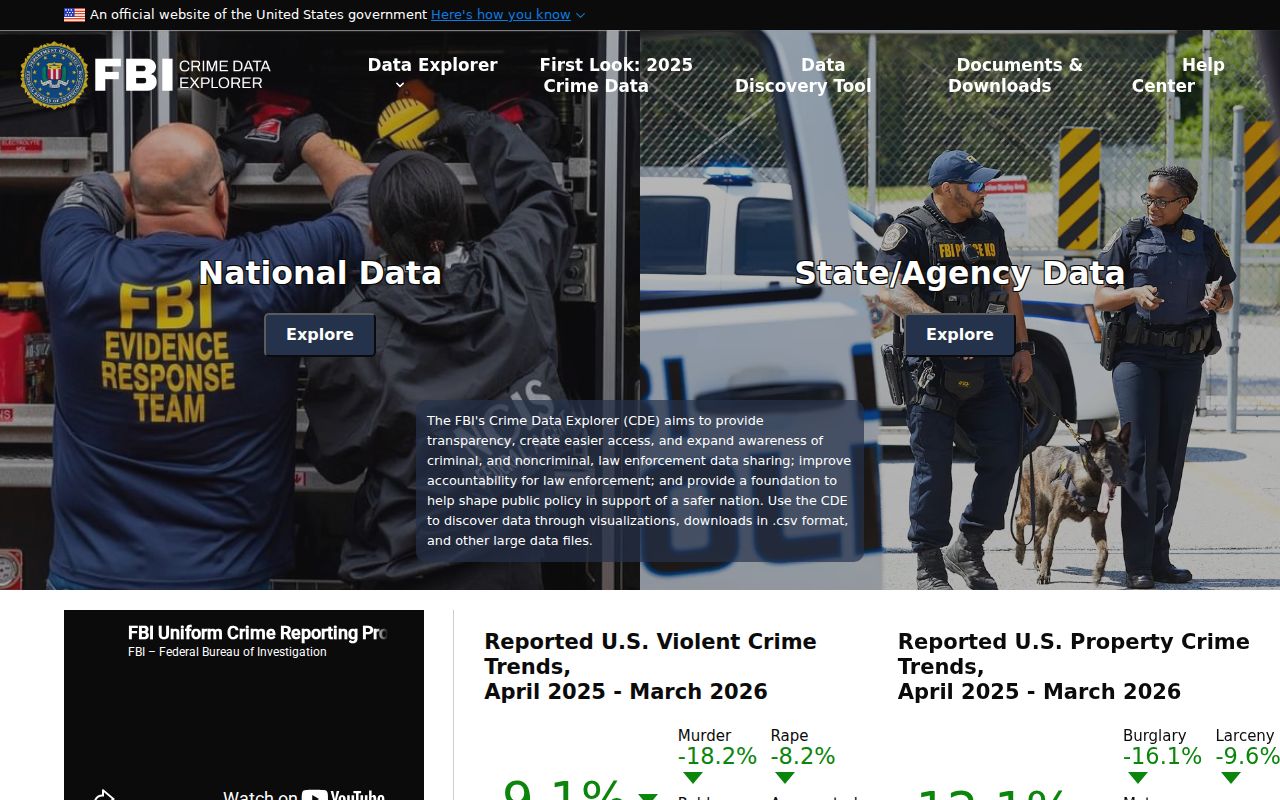
It does not identify a court case, conviction, or sentence. Use the clerk's case file for those facts and avoid treating agency counts as court outcomes.
The distinction is important in a parish with many separate police agencies. Crime Data Explorer reports offenses submitted by an agency for a period, not the number of people convicted in St. Landry Parish courts. Coverage and reporting months can differ. Never add municipal and sheriff totals without checking overlap and completeness. For an individual outcome, return to the charging forum and its clerk.
Separate St. Landry City Court Cases
Opelousas City Court handles authorized criminal, traffic, juvenile, and probation matters within its jurisdiction. Its clerk channel is reached at 337-948-2570. Eunice City Court is reached at 337-457-6535, and the Eunice City Marshal has a separate service and warrant role. Neither official city channel published a criminal case-search portal or copy price during research.
This split can create a false negative. A city misdemeanor need not appear in the 27th Judicial District Court index, while a felony filed by the district attorney belongs at the parish clerk. Use the arrest location, issuing court, citation, or case number to choose the first office. If a city charge later becomes a district prosecution, treat the two records as related but distinct files.
Reading St. Landry Court Outcomes
Louisiana docket terms must be read with care. A bill of information is the prosecutor's formal charging instrument. A true bill is a grand jury indictment, while a no bill means the grand jury declined to indict. Nolle prosequi records the prosecutor's termination of a charge. It does not mean a judge or jury found the accused not guilty.
Dismissed, acquitted, and convicted of an amended charge describe different results. A dismissal or set-aside under Article 893 or 894 after probation is also not the same as expungement. Louisiana expungement generally removes a qualifying record from normal public access without physically destroying it. When shorthand creates doubt, obtain the final minute, judgment, and sentence from the clerk.
- Arraignment
- The hearing where the accused answers the filed charge.
- Capias
- A court order directing that a person be taken into custody.
- Disposition
- The recorded outcome of a charge.
- Certified copy
- A clerk-authenticated court document, distinct from a portal printout.
Case Record Access and Restrictions
Louisiana Public Records Law generally supports inspection and copying during regular hours. Juvenile, adoption, sealed, expunged, protected-identity, and active investigative material can remain closed or redacted.
Online access may be narrower than the paper file. Ask for segregable non-exempt portions and identify the case by court, number, name, and date range. Request a certified judgment from the clerk when legal proof is needed.
Louisiana law distinguishes inspection from buying copies. A requester may inspect a public record during regular office hours without an examination fee, while reasonable charges can apply to copies. If access is disputed, the custodian must give a written determination and legal basis within five days, excluding weekends and legal holidays. Keep the request and response if review or enforcement becomes necessary.
A public court docket also does not open every related file. Prosecutor work product, grand-jury material, protected victim information, and public defender client files remain outside the ordinary clerk search. Expunged material is generally confidential to the public but remains available to specified criminal-justice and licensing bodies. Searchers reviewing their own St. Landry Parish court history should not assume an old online result reflects the full legal status of an expungement order.